Loss is one of the most heavily used terms in Indian M&A and investment agreements. But a ‘loss’ to the company and a ‘loss’ to an investor are not the same thing under Indian law.


Loss is one of the most heavily used terms in Indian M&A and investment agreements. But a ‘loss’ to the company and a ‘loss’ to an investor are not the same thing under Indian law.
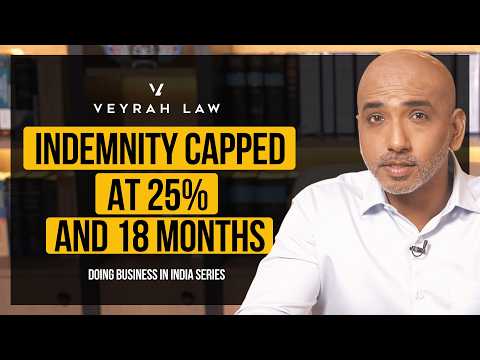
Negotiate a 75% indemnity cap in an Indian deal and you may still only be able to recover 25% of it. In this episode of the Veyrah Law series, Ajay Joseph (Partner) explains why India’s exchange control framework, not the transaction document, sets the real limits on cross-border M&A indemnities. Indian deals typically build an elaborate indemnity architecture: unlimited exposure on fundamental warranties such as title and authority to transact, caps of 25% to 75% of deal value on general warranties, and a further layer of de minimis thresholds, baskets and survival periods borrowed largely from international practice.
Your contract may appear airtight on paper. But, what actually happens when you try to enforce a provision that is legally doubtful or potentially void under Indian law?
Liquidation preference is perhaps the single most important financial protection for a venture capital investor. But in India, it is considerably harder to enforce than most investors realise.
Is the anti-dilution clause in your VC term sheet actually enforceable in an Indian down round?
In this episode of the Veyrah Law series, Ajay Joseph (Partner at Veyrah Law) breaks down why a standard anti-dilution mechanism can run into serious legal walls in India, and how to structure it so it actually works.
Is the carefully negotiated non-compete clause in your VC term sheet or employment contract actually enforceable?
In this episode of the Veyrah Law series, Ajay Joseph (Partner at Veyrah Law) breaks down why most non-compete clauses in India are completely unenforceable and what founders, investors, and businesses should use instead to actually protect their interests.
Most investors devote significant attention to planning their entry into India. Far fewer think carefully enough about how they will eventually exit. India continues to evolve as an investment destination, but it remains one of the more challenging jurisdictions in the world for foreign investors to exit. Positive exits through an IPO or a secondary sale can be executed effectively with adequate planning. Distress exits are a different story: sellers may face depressed valuations, limited bargaining power and residual liabilities that can continue long after the investment has ended.
In most markets, businesses manage risk through contracts, clearly defined legal remedies and courts that enforce them. In India, that final element is often where the system becomes difficult. Enforcement can take years and, in some cases, decades. Businesses operating in India therefore need to think beyond the contract itself and adopt practical strategies for managing disputes in a legal system where timely enforcement is rare.
Director liability in India is extensive, keeping many foreign investors awake at night. Even where directors are innocent, they can remain entangled in litigation for years. This episode of the Veyrah Law series explores the practical realities of holding board positions in India. While directorships are traditionally used to retain business oversight, the associated legal risks can be significant.