
Acquiring Indian Businesses: What Global Investors Must Know | Doing Business in India | Episode 26
GeneralJuly 8, 2026
Acquiring an Indian business follows familiar international principles but with a distinct Indian twist at almost every step. The tools are available: share purchase, slump sale, inbound reverse merger. But two restrictions catch most foreign acquirers off guard. Under Indian exchange control law, a foreign buyer must pay at least fair market value for shares acquired from an Indian resident; below-FMV pricing is simply not permitted. And deferred consideration or holdback structures are capped at 25% of total deal value, for a limited period only. Classic Western deal protections such as escrow, earnouts, warranty holdbacks, must be reimagined within that constraint.
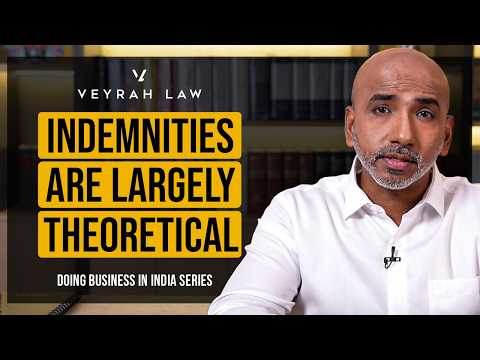
In this episode of the Veyrah Law series, Ajay Joseph (Partner at Veyrah Law) sets out the practical framework for foreign acquirers in India: why indemnities in Indian acquisitions are largely theoretical and diligence is your only real protection, how to structure earnouts and deferred consideration inside the Indian entity to work around FEMA limits, the growing role of warranty and indemnity insurance in Indian M&A, why tax drives structure and GAAR must be respected, and why regulatory history travels with the deal and must be priced in, or walked away from. India's M&A market is maturing rapidly. The acquirers who succeed do their diligence thoroughly, structure creatively within the rules and are never afraid to walk away.

Keywords
- Slump Sale: Transfer of an entire business undertaking as a going concern for lump sum consideration.
- Fair Market Value (FMV) Rule: Rule requiring that foreign buyers must pay at least FMV.
- 25% Holdback Limit: Indian exchange control caps deferred or held-back deal consideration at 25% maximum.
- Inbound Reverse Merger: Foreign company merging into an Indian company.
- Warranty and Indemnity (W&I) Insurance: Insurance covering warranty breaches.
- GAAR (General Anti-Avoidance Rule): Tax rule targeting structures lacking genuine substance.
- Promoter Diligence: Background and track record check on the founder / promoter.
- FEMA (Foreign Exchange Management Act): Indian law governing cross-border payments, share transfers and acquisition structuring.
Timestamps
Production Date:
Recorded on 15 May 2026