
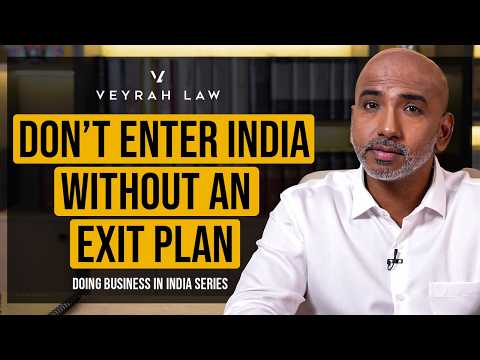
Exiting Indian Businesses: What Foreign Investors Must Know | Doing Business in India | Episode 28
GeneralJuly 22, 2026
Most investors devote significant attention to planning their entry into India. Far fewer think carefully enough about how they will eventually exit. India continues to evolve as an investment destination, but it remains one of the more challenging jurisdictions in the world for foreign investors to exit. Positive exits through an IPO or a secondary sale can be executed effectively with adequate planning. Distress exits are a different story: sellers may face depressed valuations, limited bargaining power and residual liabilities that can continue long after the investment has ended.
In this episode of the Veyrah Law series, Ajay Joseph (Partner at Veyrah Law) examines the full range of exit options available to foreign investors in India. The discussion covers each available route; secondary sale, IPO, merger with a listed entity, share buyback and formal winding up. He also sets out a practical framework for executing them effectively: aligning your entry structure with your intended exit from the outset, investing through an offshore holding entity to preserve flexibility, beginning exit planning twelve to twenty-four months in advance, negotiating residual liability protections carefully, preparing for an IPO years before filing, and conducting a formal wind-down properly where closure is the preferred outcome. The central takeaway is straightforward: the best time to plan your exit is the day you make your investment.

Keywords
- Secondary Sale: Sale of shares or business to a new buyer.
- IPO (Initial Public Offering): Listing on any of the stock exchanges in India.
- IBC (Insolvency and Bankruptcy Code, 2016): Indian legislation introducing time-bound resolution and voluntary liquidation processes.
- NCLT (National Company Law Tribunal): Dedicated tribunal overseeing Indian insolvency, merger, and winding-up proceedings.
- Offshore Intermediary Structure: Special purpose vehicle set up as holding company of Indian entity in a foreign country.
- Share Buyback: Indian company repurchasing its own shares.
- Strike Off: Faster company closure mechanism.
- Residual Liability: Tax demands, regulatory notices, and labour claims that can surface after deal closing.
- RBI Pricing Compliance: Central bank pricing rules on share transfers.
- Voluntary Liquidation: Shareholder-driven statutory closure through NCLT.
Timestamps
Production Date:
Recorded on 15 May 2026