
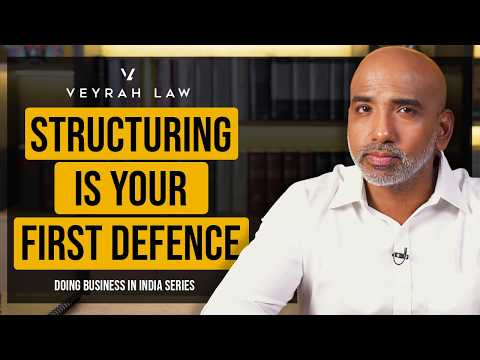
How Strategic Structuring Helps Manage Risk in India | Doing Business in India | Episode 7
GeneralFebruary 25, 2026
When disputes (commercial or regulatory) take years to resolve in India, how can foreign investors protect their investments?
In India, sound structuring is your first line of defence against regulatory scrutiny and prolonged litigation. Unlike developed markets, Indian legal proceedings can linger for years, exposing foreign parent companies and nominee directors to significant long-term liability.
In this episode of the Veyrah Law series, Ajay Joseph (Partner) explains why international investors must adopt a deliberate “what-if” mindset. We examine real-world challenges like parent company liability and the risks of appointing foreign nationals as directors.
Ajay shares practical strategies, including using intermediary investment vehicles, exercising control through shareholder rights in the Articles of Association, and maintaining arm’s-length separation from Indian operations. Whether planning market entry or managing existing operations, an ounce of prevention is worth a pound of cure.

Keywords
- AoA (Articles of Association): The company’s internal “rulebook” used to embed protective shareholder rights.
- RBI (Reserve Bank of India): The central bank and primary regulator for all foreign inbound investments.
- Intermediary Investment Vehicle: A “holding company” (often in a different jurisdiction) used to own the Indian entity, acting as a buffer to protect the global parent from direct liability.
- Nominee Director: An individual appointed to represent an investor. In India, they often face personal legal exposure for company non-compliance.
- Board Observer: A role allowing for oversight of board meetings without taking on the legal risks or voting powers of a Director.
- Arm’s-Length Separation: A principle requiring a parent and subsidiary to operate as independent entities to prevent being treated as one entity for liability purpose.
Timestamps
Production Date:
Recorded on 20 December 2025